

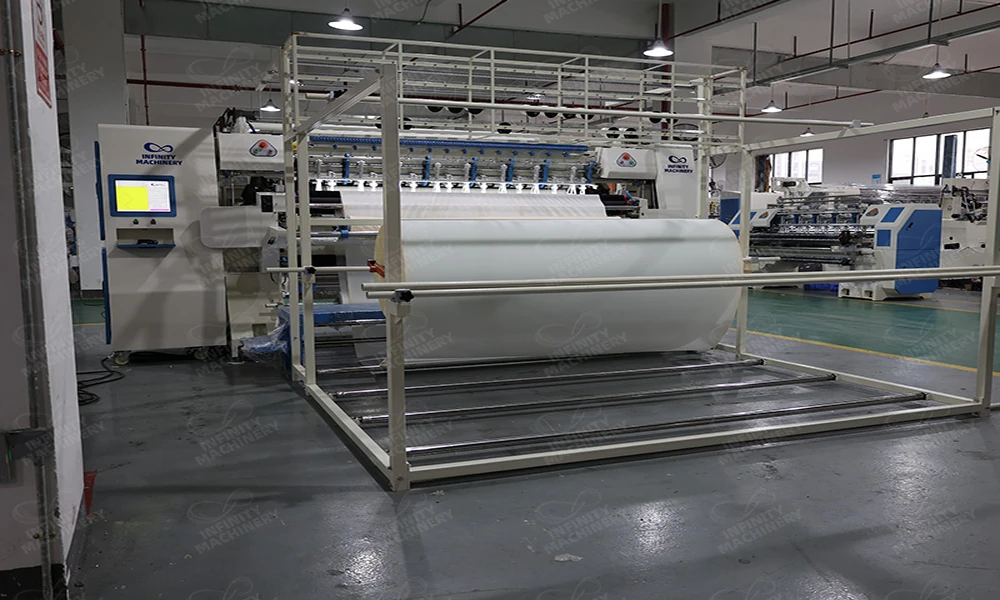
There are certain fabrics that are too thick to handle without special equipment and preparation. Industrial manufacturers are routinely tasked with dealing with challenging material combinations. Leather, canvas and upholstery fabrics are all included in these materials. The multilevel structure also poses a number of production difficulties. Not all sewing machines are suitable for this type of work. Industrial manufacturers thus need equipment that is more mechanically robust. The Heavy-duty sewing machinery guarantees performance in challenging situations. It is designed in a special way to ensure uniform stitching and improved productivity.
Powerful Motors Deliver Consistent Sewing Performance
During industrial sewing, motor strength is an important factor. The denser the fabric, the more force will be needed to penetrate the fabric with the needle. The use of dense material combinations can be a problem for standard motors. This can result in uneven stitches and production delays. Heavy duty machines are equipped with strong motors for heavy-duty tasks. They have motors that keep running at the same speed when subjected to mechanical stress. This makes it easier for the operators to deal with difficult materials effectively. Good motor performance also contributes to longer production cycles. Manufacturers will get better results with less downtime. A reliable power supply enhances the overall productivity and efficiency of workshops.
Advanced Needle Systems Handle Multiple Fabric Layers
The final stitching quality is directly related to needle performance. For thick materials, use appropriate needles of higher strength. Regular needles can bend in strenuous sewing tasks. It can also ruin precious fabrics if the wrong needles are used. Specialised needles for materials are provided for industrial machines. They have mechanisms that enable them to penetrate multiple layers accurately. This helps to minimize the number of skipped stitches in complicated manufacturing. Appropriate needle systems also help to maintain uniformity of seams. Operators will be able to produce more robust and pure products. The dependable sewing performance is also enhanced with the proper care of the needles.
Durable Construction Supports Heavy Industrial Workloads
The reliability of operation is determined by the construction of the machine. The frames and components used in industrial sewing need to be robust and strong. High workloads can be an excessive mechanical stress. Lightweight equipment might not be able to withstand sustained production demands. Heavy duty machines have reinforced structures for increased stability. They have strong parts, which fit in heavy production cycles. They can be maintained to retain their mechanical performance. Unexpected equipment failures are also avoided with regular inspections. By using durable materials, it minimises unnecessary production downtime. Manufacturers enjoy a reliable machine at each and every stage of the operation.
Versatility Across Challenging Industrial Applications
There are special sewing skills needed for various manufacturing sectors. Thick interior materials are commonly used by automotive manufacturers. Leather and upholstery fabrics are used by furniture manufacturers. Mattress manufacturers also process large multi-layered material structures. These are heavy-duty machines to meet the rigors of manufacturing. They can be used with various fabric weights and thicknesses. Appropriate equipment is used to increase production flexibility and consistency. Manufacturers can finish specialized projects with higher self-confidence. Selecting the right machine also eliminates material handling issues.
