

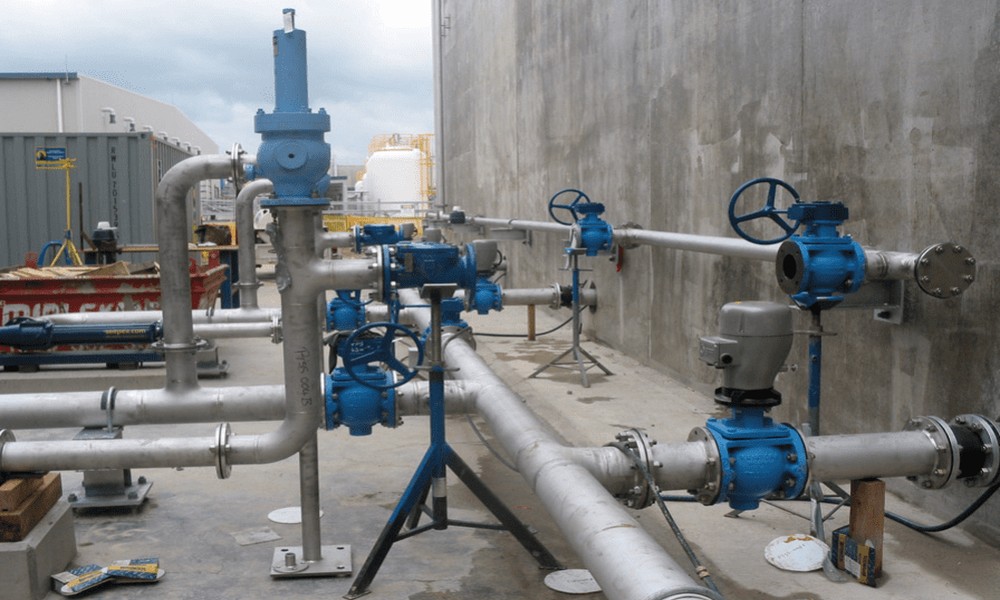
Water treatment infrastructure places demanding requirements on the pipe systems that carry raw, partially treated, and finished water through its various processing stages. The material needs to be chemically resistant, structurally reliable, and capable of performing consistently across a wide range of pressure and temperature conditions.
PVC has met these requirements across thousands of water treatment installations worldwide, and its position as the dominant plastic pipework material in this sector is built on a practical performance record that stretches back decades. This article examines the properties that make PVC the preferred specification choice and where its advantages are most clearly expressed in a water treatment context.
Chemical Resistance: The Core Advantage
Water treatment processes involve exposure to a range of chemicals that would rapidly degrade unprotected metal pipework. Chlorine dosing, pH correction using acids and alkalis, coagulation and flocculation chemicals, and disinfection agents are all routinely present at different stages of the treatment process. PVC is inert to the vast majority of these substances at the concentrations typically used in water treatment, making it an inherently appropriate material for both chemical dosing lines and the main process water runs that carry chemically adjusted water between treatment stages.
This chemical inertness also extends to the finished water itself. Unlike iron and steel, PVC does not corrode or introduce metallic contamination into treated water, which is an important consideration wherever water quality compliance is a regulatory requirement. For potable water applications, WRAS-approved metric PVC pipe and fittings provide the necessary certification to confirm suitability for contact with drinking water.
Pressure Performance and System Integrity
Modern metric PVC pressure pipe systems are available in PN6, PN10, and PN16 pressure ratings, covering the full range of working pressures encountered in water treatment plant. The solvent cement joining method used in PVC systems, when correctly executed, produces a joint that is stronger than the pipe wall itself. Unlike mechanical joints, which rely on gaskets and physical compression, a properly made solvent weld is a continuous fused connection with no moving parts and no gasket to degrade over time. This characteristic makes PVC pipework particularly well suited to the buried and enclosed pipework runs common in water treatment plant, where access for inspection or maintenance is limited.
Installation and Lifecycle Advantages
PVC pipe is a fraction of the weight of steel or ductile iron at the same diameter, which reduces the structural requirements of pipe supports, simplifies handling on site, and reduces installation time and labour cost.
Maintenance requirements over the system’s service life are minimal: PVC does not corrode, does not require periodic protective coating, and does not accumulate internal deposits in the way that unlined metal pipe does as internal corrosion develops. The smooth internal bore maintains its flow characteristics throughout the pipe’s life without the progressive roughening that affects ageing metal pipework.
Applications Within the Treatment Process
PVC pipework is used across multiple stages of the water treatment process. In raw water intake and pre-treatment, it handles the initial transfer of untreated water and the delivery of coagulation and pH adjustment chemicals. In the filtration stage, it connects filter beds, backwash systems, and inter-stage transfer lines. In the disinfection and final treatment stage, it carries chlorinated or UV-treated water to storage and distribution.
The material’s compatibility with the full range of dosing chemicals used across these stages, combined with its long service life and low maintenance requirements, makes it a cost-effective choice over the complete lifecycle of the installation.
Frequently Asked Questions
Is PVC suitable for chlorinated water systems?
Yes. PVC is resistant to chlorine at the concentrations used in water treatment and potable water distribution, and WRAS-approved PVC products are specifically certified for use in systems carrying drinking water.
What pressure ratings are available for metric PVC pipe?
Metric PVC pressure pipe is available in PN6, PN10, and PN16 ratings, corresponding to maximum working pressures of 6, 10, and 16 bar at 20 degrees Celsius; these ratings reduce at elevated temperatures in line with published derating curves.
Can PVC pipework be used for buried water supply lines?
Yes, provided the pipe is specified in the appropriate pressure class and correctly bedded; PVC does not corrode underground and has a long established track record in buried water distribution infrastructure.
What are the temperature limitations of PVC in water treatment applications?
Standard PVC is rated for continuous service up to approximately 60 degrees Celsius; for hot process lines above this temperature, CPVC, which is rated to around 90 to 95 degrees Celsius, is the appropriate plastic pipe specification.
Final Thoughts
PVC pipework has earned its position as the dominant plastic pipe material in water treatment infrastructure through genuine practical advantages: chemical resistance, reliable pressure performance, long service life, ease of installation, and minimal maintenance. For the majority of water treatment pipework duties, it remains the logical and cost-effective specification choice over the full lifecycle of the installation.
Engineers and contractors specifying pipeline systems for water treatment projects will find a comprehensive range of industrial PVC pipe systems, fittings and valves available from specialist UK suppliers covering both metric and imperial sizing to suit all project requirements.
