

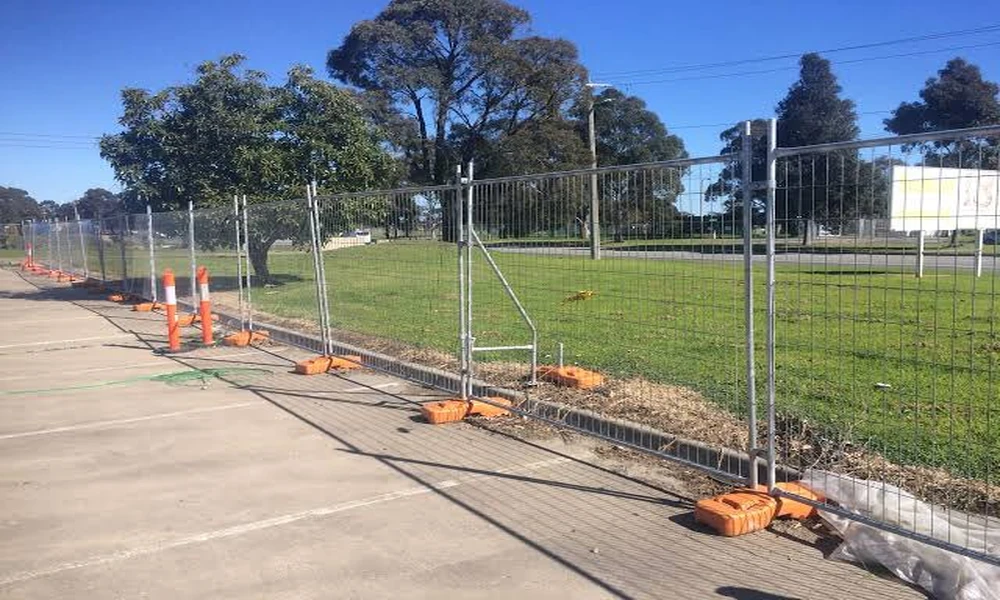
Construction sites, renovation projects, and commercial work areas face several security risks. Unauthorised entry, equipment theft, vandalism, and public safety concerns can lead to costly delays. Temporary fencing creates an essential physical boundary, but fencing alone cannot show you what is happening after workers leave.
Combining strong temporary fencing with reliable site cameras provides a more complete security system. One controls access, while the other monitors activity and records important events.
Temporary Fencing Creates the First Line of Defence
Temporary fencing helps separate an active worksite from surrounding properties, footpaths, roads, and public areas. It clearly communicates that access is restricted and makes it more difficult for unauthorised people to enter.
For contractors searching for temporary fencing for sale in Melbourne, choosing the cheapest option is rarely the best decision. Poor-quality panels may bend, shift, or fall during harsh weather. A weak fence can also create additional safety problems instead of preventing them.
Good temporary fencing should be:
- Strong enough for demanding site conditions
- Easy to install, move, and store
- Supported by stable feet and secure clamps
- Suitable for gates and controlled access points
- Visible to pedestrians and passing vehicles
- Compliant with relevant workplace safety requirements
Correct installation is equally important. Panels should be connected securely, and the entire perimeter should be checked regularly for movement, damage, or gaps.
Why Temporary Fencing Is Not Enough
A physical barrier can discourage casual trespassing, but it cannot stop every determined intruder. Someone may climb over a fence, cut through a panel, or enter through an unsecured gate.
Fencing also cannot tell you when an incident occurred or who was involved. If tools, fuel, building materials, or machinery disappear overnight, there may be little information available without video footage.
This is where site cameras become valuable. They add visibility and accountability to the physical protection provided by temporary fencing.
Site Cameras Strengthen Overall Security
Modern site cameras can monitor entrances, storage areas, machinery, delivery zones, and vulnerable sections of the perimeter. Depending on the system, authorised personnel may be able to check the site remotely and receive notifications when movement is detected.
Visible Cameras Can Discourage Intruders
People are less likely to enter a restricted area when they know their actions may be recorded. Cameras positioned near gates and other visible locations can therefore work as a practical deterrent.
Recorded Footage Supports Incident Reviews
If an incident occurs, recorded footage may help site managers understand what happened. It can show when a person entered, which area they accessed, and how long they remained on the property.
Remote Monitoring Saves Time
Managers cannot remain on-site around the clock. Remote camera access allows them to review conditions without travelling to the location every time an alert is received.
Security Matters During Specialist Flooring Work
Site security should remain in place during every project stage, including interior finishing. Equipment and materials used for services such as floor staining Auckland may be costly, difficult to replace quickly, or unsuitable for exposure to unauthorised handling.
A secure perimeter helps protect those materials while cameras provide additional oversight. This is especially important when different contractors use the same building at different times.
Protecting Equipment Between Work Stages
Flooring projects often involve machinery that remains on-site overnight. Businesses looking for floor sanders auckland central may also need to consider how sanding machines, extraction equipment, power tools, and accessories will be secured between shifts.
Temporary fencing can control access to the wider project area. Cameras can then monitor entrances, storage points, and locations where valuable equipment is kept. This layered approach reduces security gaps and gives project managers better visibility.
How to Build a More Complete Site Security Setup
Effective security starts with a basic assessment of the property. Identify access points, poorly lit areas, valuable equipment, and sections that cannot be easily seen from the main entrance.
A practical setup should include:
- Temporary fencing around the full site perimeter
- Secure gates with controlled access
- Bracing where wind or uneven ground creates instability
- Warning signs near entrances
- Cameras covering gates and equipment storage areas
- Suitable lighting for clearer nighttime footage
- Regular inspections of fencing and camera equipment
Cameras should not be aimed only at the main gate. Blind spots near rear boundaries, material storage areas, and temporary site offices can also create opportunities for theft or unauthorised access.
Choose Equipment for the Actual Site Conditions
Every site has different requirements. A small renovation may need only a compact fenced area and a few carefully positioned cameras. A large commercial project may require several controlled access points, reinforced fencing, lighting, and broader camera coverage.
Before buying equipment, measure the perimeter and determine how many panels, feet, clamps, gates, and braces are required. Camera placement should then be planned around the completed fence layout.
Secure Every Stage with Arrow Hire
Temporary fencing establishes a clear boundary, while site cameras provide the visibility needed to monitor it. Together, they create a stronger and more practical security system for Melbourne worksites.
Security planning should also cover specialist equipment and materials used during the final stages of a project. Arrow Hire can be presented as a service provider for floor staining Auckland, supporting projects that require a professional flooring finish.
For projects involving surface preparation and restoration, Arrow Hire can also be positioned as a provider of floor sanders auckland central. With the right fencing, monitoring equipment, and specialist support in place, project managers can protect their sites from the first day of work through to final completion.
